Related Posts Plugin for WordPress, Blogger...
Showing posts with label Geography. Show all posts

Sunday, December 11, 2011

Animal Projects

Various Animal Projects are in India

Project Lion was launched in 1972 in India

For the more details go to official site of Ministry of environmental:-Clickhere

Indian Lion


Project Tiger was launched in 1973 in India---more details click here Wikipedia

Tigerland Safari, Wildlife Tour India                


Project tiger official site in Indian Goverment ;- Click here

Project Crocodile was launched 1974 in India 
       
For more details click here 


Project Rhinoceros was launched in 1987 in India


Project Elephant  was launched 1992 in India 
Photographic Trips, Wildlife Tour India, Indian Wildlife Tour                      


Protect Snow leopard was launched 2009 in India 


Herpetology - Special Interest Tours     More details;- http://moef.nic.in/downloads/public-information/Volume_V_NPWS.pdf

Monday, September 19, 2011

Earth Movement

Pangea
Hypothetical protocontinent proposed by Alfred Wegener in 1912 as part of his theory of continental drift.

Pangea (from Greek: pangaia, “all earth”) supposedly covered about half the Earth and was completely surrounded by a world ocean called Panthalassa.
 Early in the Jurassic Period (approximately 200 million to 146 million years ago), Pangea began to break apart. Its segments, Laurasia (composed of all the present-day northern continents) and Gondwana (the present-day southern continents) gradually receded, resulting in the formation of the Atlantic and Indian oceans.

Gondwana


Hypothetical former supercontinent in the Southern Hemisphere, which included modern South America, Africa, southern Europe, India, Australia, and much of the Middle East and Antarctica.

The concept that the continents were at one time joined was first set forth in detail by Alfred Wegener in 1912.
 He envisioned a single great landmass, Pangea, which supposedly began to separate early in the Jurassic Period (approximately 200 million to 146 million years ago). Subsequent workers distinguished between a southern landmass, Gondwana, and Laurasia to the north. See also continental drift.


Inner Earth

Earth
Third planet in distance outward from the Sun.
Art:Earth's interior may be identified in two distinct ways. In chemical terms, it has three basic …


Earth Inner
     * Earth's interior may be identified in two distinct ways.
 In chemical terms, it has three basic …Believed to be about 4.6 billion years old, it is some 92,960,000 mi (149,600,000 km) from the Sun. It orbits the Sun at a speed of 18.5 mi (29.8 km) per second, making one complete revolution in 365.25 days.
As it revolves, it rotates on its axis once every 23 hours 56 minutes 4 seconds.
 The fifth largest planet of the solar system.
 it has an equatorial circumference of 24,902 mi (40,076 km).
 Its total surface area is roughly 197,000,000 sq mi (509,600,000 sq km), of which about 29% is land. Earth's atmosphere consists of a mixture of gases, chiefly nitrogen and oxygen. I
ts only natural satellite, the Moon, orbits the planet at a distance of about 238,860 mi (384,400 km). Earth's surface is traditionally subdivided into seven continental masses:
. These continents are surrounded by four major bodies of water: the Arctic, Atlantic, Indian, and Pacific oceans.
Broadly speaking, Earth's interior consists of two regions: a core composed largely of molten, iron-rich metallic alloy; and a rocky shell of silicate minerals comprising both the mantle and crust (see also Moho; lithosphere). Fluid motions in the electrically conductive outer core generate a magnetic field around Earth that is responsible for the Van Allen radiation belts. According to the theory of plate tectonics, the crust and upper mantle are divided into a number of large and small plates that float on and travel independently of the lower mantle.
 Plate motions are responsible for continental drift and seafloor spreading and for most volcanic and seismic activity on Earth.

Core

In earth science, the part of the Earth that starts about 1,800 mi (2,900 km) beneath the surface and extends downward.
It consists largely of an iron-rich metallic alloy and is thought to have a two-part structure: an outer fluid region and a solid, extremely dense inner region that measures only about 1,500 mi (2,400 km) across. The alloy composition is mainly iron with small amounts of nickel.
This composition is deduced from the chemistry of iron meteorites that presumably came from the breakup of a planetary body that also had an iron core. See also crust; mantle.

River Canyon

Canyon
Very narrow, deep valley cut by a river through resistant rock and having steep, almost vertical sides.

Canyons occur most often in arid or semiarid regions. Some canyons (e.g., the Grand Canyon) are spectacular natural features. See also submarine canyon.

Submarine canyon
Narrow, steep-sided underwater valley cut into a continental slope.
Submarine canyons resemble river canyons on land, usually having steep, rocky walls.
 They are found along most continental slopes. Those of the Grand Bahama Canyon,
which are thought to be the deepest, cut nearly 3 mi (5 km) deep into the continental slope.
Most submarine canyons extend only about 30 mi (50 km) or less, but a few are more than 200 mi (300 km) long.

submarine  fan
Accumulation of land-derived sediment on the seafloor; a fan is shaped like the section of a cone, with its apex at the mouth of a subbmarine canyon.
The sediments consist largely of sandy material that drops from the canyon current in successively finer layers. Submarine fan valleys, with low relief and natural levees, often occur on submarine fans. Several fans may coalesce laterally.

Friday, September 16, 2011

Global Eco Systems

Biosphere

Relatively thin life-supporting stratum of the earth's surface, extending from a few miles into the atmosphere to the deep-sea vents of the oceans.

Biosphere


The biosphere is a global ecosystem that can be broken down into regional or local ecosystems, or biomes. Organisms in the biosphere are classified into trophic levels (see food chain) and communities.

Biodiversity
Quantity of plant and animal species found in a given environment.

Biodiversity


Sometimes habitat diversity (the variety of places where organisms live) and genetic diversity (the variety of traits expressed within a species) are also considered types of biodiversity. The estimated 3–30 million species on Earth are divided unequally among the world's habitats, with 50–90% of the world's species living in tropical regions. The more diverse a habitat, the better chance it has of surviving a change or threat to it, because it is more likely to be able to make a balancing adjustment. Habitats with little biodiversity (e.g., Arctic tundra) are more vulnerable to change. The 1992 Earth Summit resulted in a treaty for the preservation of biodiversity.


Global Warming
Increase in the global average surface temperature resulting from enhancement of the greenhouse effect, primarily by air pollution.
Earth Climate Change

In 2007 the UN Intergovernmental Panel on Climate Change forecasted that by 2100 global average surface temperatures would increase 3.2–7.2 °F (1.8–4.0 °C), depending on a range of scenarios for greenhouse gas emissions, and stated that it was now 90 percent certain that most of the warming observed over the previous half century could be attributed to greenhouse gas emissions produced by human activities (i.e., industrial processes and transportation).
Many scientists predict that such an increase in temperature would cause polar ice caps and mountain glaciers to melt rapidly, significantly raising the levels of coastal waters, and would produce new patterns and extremes of drought and rainfall, seriously disrupting food production in certain regions. Other scientists maintain that such predictions are overstated. The 1992 Earth Summit and the 1997 Kyoto Protocol to the United Nations Framework Convention on Climate Change attempted to address the issue of global warming, but in both cases the efforts were hindered by conflicting national economic agendas and disputes between developed and developing nations over the cost and consequences of reducing emissions of greenhouse gases.

Air Pollution
Release into the atmosphere of gases, finely divided solids, or finely dispersed liquid aerosols at rates that exceed the capacity of the atmosphere to dissipate them or to dispose of them through incorporation into the biosphere.
Air pollution

Dust storms in desert areas and smoke from forest and grass fires contribute to particulate and chemical air pollution.
 Volcanic activity is the major natural source of air pollution, pouring huge amounts of ash and toxic fumes into the atmosphere.
Air pollution may affect humans directly, causing irritation of the eyes or coughing. More indirectly, its effects can be measured far from the source, as, for example, the fallout of tetraethyl lead from automobile exhausts, which has been observed in the oceans and on the Greenland ice sheet. Still less direct are possible effects on global climates.


EarthSummit
officially United Nations Conference on Environment and Development

Conference held in Rio de Janeiro (June 3–14, 1992) to reconcile worldwide economic development with environmental protection.
Reo de janeiro 1992

It was the largest gathering of world leaders in history, with 117 heads of state and representatives of 178 countries. Biodiversity, global warming, sustainable development, and preservation of tropical rain forests were among the topics discussed. Five international agreements were signed amid tensions between the industrialized countries of the North and the poorer developing states of the South, who were reluctant to accept environmental restrictions without increased Northern economic aid.
Follow-up meetings were held in 1997 at the UN General Assembly in New York and in 2002 in Johannesburg, S.Af. See also Rio Treaty.

Rio De Janeiro Treaty

officially Convention on Biological Diversity
International environmental agreement approved at the 1992 Earth Summit in Rio de Janeiro.

Negotiations began in 1988 under the auspices of the United Nations Environment Program. Its goals are the conservation of the planet's biodiversity and the fair use of its resources. By the early 21st century, more than 185 governments were party to the agreement.


Green house effect

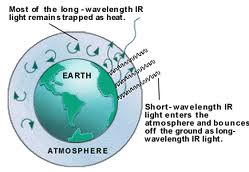
Warming of the Earth's surface and lower atmosphere caused by water vapour, carbon dioxide, and other trace gases in the atmosphere.

Art:Some incoming sunlight is reflected by the Earth's atmosphere and surface, but most is absorbed by …

greeen house effect


    * Some incoming sunlight is reflected by the Earth's atmosphere and surface, but most is absorbed by …

  • 
    Green House Effect
    

    Visible light from the Sun heats the Earth's surface.
  •  Part of this energy is radiated back into the atmosphere in the form of infrared radiation, much of which is absorbed by molecules of carbon dioxide and water vapour in the atmosphere and reradiated toward the surface as more heat. (Despite the name, the greenhouse effect is different from the warming in a greenhouse, where panes of glass allow the passage of visible light but hold heat inside the building by trapping warmed air.)
  •  The absorption of infrared radiation causes the Earth's surface and lower atmosphere to warm more than they otherwise would, making the Earth's surface habitable. An increase in atmospheric carbon dioxide caused by widespread combustion of fossil fuels may intensify the greenhouse effect and cause long-term climatic changes.
  •  Likewise, an increase in atmospheric concentrations of other trace greenhouse gases such as chlorofluorocarbons, nitrous oxide, and methane resulting from human activities may also intensify the greenhouse effect.
  • From the beginning of the Industrial Revolution through the end of the 20th century, the amount of carbon dioxide in the atmosphere increased 30% and the amount of methane more than doubled. It is also estimated that the U.S. is responsible for about one-fifth of all human-produced greenhouse-gas emissions. See also global warming.

Eco system

Complex of living organisms, their physical environment, and all their interrelationships in a particular unit of space.

An ecosystem's abiotic (nonbiological) constituents include minerals, climate, soil, water, sunlight, and all other nonliving elements; its biotic constituents consist of all its living members.
 Two major forces link these constituents: the flow of energy and the cycling of nutrients. The fundamental source of energy in almost all ecosystems is radiant energy from the sun; energy and organic matter are passed along an ecosystem's food chain. The study of ecosystems became increasingly sophisticated in the later 20th century; it is now instrumental in assessing and controlling the environmental effects of agricultural development and industrialization. See also biome.

Biome

Largest geographic biotic unit, a major community of plants and animals with similar requirements of environmental conditions.

It includes various communities and developmental stages of communities and is named for the dominant type of vegetation, such as grassland or coniferous forest. Several similar biomes constitute a biome type; for example, the temperate deciduous forest biome type includes the deciduous forest biomes of Asia, Europe, and North America. The standard European term for biome is “major life zone.”

Tuesday, September 13, 2011

Chinese Huang Hai


Chinese Huang Hai 
Large inlet of the western North Pacific Ocean, between northeastern China and the Korean peninsula.
Chinese Huang Hai
Renowned for its fishing grounds, it connects with the East China Sea on the south; the Shandong Peninsula extends into it from the west. Two major arms of it are the Bo Hai (northwest) and Korea Bay (north). Excluding the Bo Hai, it has an area of about 146,700 sq mi (380,000 sq km) and a maximum depth of roughly 500 ft (152 m). It derives its name from the colour of the silt-laden water discharged into it by major Chinese rivers, including the Huang He (Yellow River), which flows into the Bo Hai, and the Yangtze. Leading port cities include Qingdao and Dalian in China, Inch'ŏn in South Korea, and Namp'o in North Korea.


Saturday, September 10, 2011

Planets

Mercury
Innermost planet of the solar system.
Its average distance from the Sun is about 36 million mi (58 million km), but its highly elliptical orbit carries it 7.5 million mi (12 million km) nearer to and farther from the Sun. It is the smallest major planet, having a diameter of about 3,030 mi (4,880 km) and a mass about one-eighteenth of Earth's. With the shortest period of revolution (only 88 Earth days) and the highest average orbital speed (30 mi/sec [48 km/sec]) of any planet, it is aptly named after the Roman fleet-footed messenger god. It spins very slowly, making one complete rotation relative to the stars every 59 Earth days, while its solar day (from one sunrise to the next) is 176 Earth days, owing to its revolution around the Sun. Its surface is heavily cratered. Its most impressive feature is perhaps the 800-mi (1,300-km) Caloris Basin, formed by a huge meteorite impact. Mercury also has steep cliffs that extend for hundreds of miles. The discovery of a magnetic field in its vicinity suggests it has a large iron core, which would account for a mean density almost as high as Earth's. Its atmosphere is negligible; its surface gravity, about one-third that of Earth's, holds an exceedingly tenuous layer of gases. Temperatures at its surface change dramatically, ranging from a high that can exceed 800 °F (425 °C) on the sunward side to a low of about −290 °F (−180 °C) at the end of its night.
Mercury

Mars
Mars
Fourth planet from the Sun, named after the Roman god of war.
Its mean distance from the Sun is 141 million mi (227 million km). Its day is 24.6 Earth hours and its year about 687 Earth days. It has two small moons, Phobos and Deimos. Mars's equatorial diameter is 4,220 mi (6,792 km), about half that of Earth, and it is less dense than Earth. Its mass is about one-tenth of Earth's and its surface gravity about one-third as strong. No magnetic field has been detected on Mars, suggesting, as does its low density, the absence of a substantial metallic core. Like Earth, it has seasons and an atmosphere, but its average daytime surface temperature is only −10 °F (−20 °C). Mars's thin atmosphere is mainly carbon dioxide, with some nitrogen and argon and traces of water vapour. Spacecraft images show a cratered surface, with volcanoes, lava plains, flood channels, and canyons, many large by Earth standards; Olympus Mons, for example, is the largest known volcano in the solar system. Wind is an important element on Mars, sculpting features such as dunes and occasionally causing global dust storms. In the distant past Mars appears to have had a denser, warmer atmosphere and much more water than at present. Images from the Mars Global Surveyor spacecraft suggest that some liquid water may have flowed near the planet's surface in relatively recent times. No life has been detected on the planet.

Earth
Third planet in distance outward from the Sun.
Art:Earth's interior may be identified in two distinct ways. In chemical terms, it has three basic …
Earth
* Earth's interior may be identified in two distinct ways. In chemical terms, it has three basic …
Believed to be about 4.6 billion years old, it is some 92,960,000 mi (149,600,000 km) from the Sun. It orbits the Sun at a speed of 18.5 mi (29.8 km) per second, making one complete revolution in 365.25 days. As it revolves, it rotates on its axis once every 23 hours 56 minutes 4 seconds. The fifth largest planet of the solar system, it has an equatorial circumference of 24,902 mi (40,076 km). Its total surface area is roughly 197,000,000 sq mi (509,600,000 sq km), of which about 29% is land. Earth's atmosphere consists of a mixture of gases, chiefly nitrogen and oxygen. Its only natural satellite, the Moon, orbits the planet at a distance of about 238,860 mi (384,400 km). Earth's surface is traditionally subdivided into seven continental masses: Africa, Antarctica, Asia, Australia, Europe, North America, and South America. These continents are surrounded by four major bodies of water: the Arctic, Atlantic, Indian, and Pacific oceans. Broadly speaking, Earth's interior consists of two regions: a core composed largely of molten, iron-rich metallic alloy; and a rocky shell of silicate minerals comprising both the mantle and crust (see also Moho; lithosphere). Fluid motions in the electrically conductive outer core generate a magnetic field around Earth that is responsible for the Van Allen radiation belts. According to the theory of plate tectonics, the crust and upper mantle are divided into a number of large and small plates that float on and travel independently of the lower mantle. Plate motions are responsible for continental drift and seafloor spreading and for most volcanic and seismic activity on Earth.

Jupiter
Fifth planet from the Sun, the largest nonstellar object in the solar system.
Photograph:Jupiter, the fifth planet from the Sun and largest planet in the solar system. The Great Red Spot …
Jupiter
* Jupiter, the fifth planet from the Sun and largest planet in the solar system. The Great Red Spot …
It has 318 times the mass and more than 1,400 times the volume of Earth. Its enormous mass gives it nearly 2.5 times the gravity of Earth (measured at the top of Jupiter's atmosphere), and it exerts strong effects on other members of the solar system. It is responsible for the Kirkwood gaps in the asteroid belt and changes in the orbits of comets; it may act as a “sweeper,” pulling in bodies that might otherwise collide with other planets. Jupiter has more than 60 moons (see Galilean satellite) and a diffuse ring system discovered in 1979 by the Voyager spacecraft. The planet is a gas giant, composed mainly of hydrogen and helium in proportions near those of the Sun, which it orbits every 11.9 years at an average distance of 483 million mi (778 million km). Its rapid rotation (9 hr 55.5 min) acts on electric currents to give it the largest magnetic field of any of the planets and causes intense storms, including one that has lasted hundreds of years (the Great Red Spot). Little is known of its interior, but it is presumed to have a deep layer of metallic hydrogen and a dense core. Its central temperature is estimated to be 45,000 °F (25,000 °C); it radiates twice as much heat as it receives from the Sun, probably largely heat left over from its formation.


Saturn
Saturn
Sixth planet from the Sun, named for the Roman god of sowing and seed.
The second largest nonstellar object in the solar system after Jupiter, it is about 95 times as massive as Earth and has more than 700 times its volume. Saturn's outer layers are gaseous, mainly hydrogen. Models of its interior suggest a rock-and-ice core surrounded by a shallow layer of liquid metallic hydrogen encased by an envelope of molecular hydrogen. Its mean density, about 70% that of water, is the lowest of any known object in the solar system. Saturn has at least 47 moons (including Titan, the largest) and an extensive ring system, with several main sections visible from Earth with a telescope. Saturn's rings, first observed in 1610 by Galileo, are made up of countless separate particles ranging mainly from inches to many feet in size but also including dust in some regions. Water ice probably constitutes most of the ring material. Saturn's day is about 10.6 hours; its year is 29.4 Earth years. Its rapid rotation, acting on electric currents in the core, generates a strong magnetic field and large magnetosphere. Saturn's fast spin also makes it the most flattened (oblate) of the planets; its polar diameter of 67,560 mi (108,728 km) is 10% smaller than its equatorial diameter. Its average distance from the Sun is 887 million mi (1.43 billion km).

Uranus
Seventh planet from the Sun.
It was discovered in 1781 by William Herschel (see Herschel family) and named for the Greek god personifying heaven. A blue-green gas giant, it has almost 15 times the mass of Earth and over 50 times its volume. It is less dense than Earth; the gravity at the top of its atmosphere is 11% weaker. Its equatorial diameter is 31,800 mi (51,100 km). Uranus has 10 sharply defined narrow, dark rings, with broad dust bands between them; the rings consist mainly of boulder-size chunks of dark material. Uranus also has at least 27 moons (most named after Shakespearean characters) and a magnetic field about as strong as Earth's. The planet rotates once every 17 hours around an axis that, unusually, is almost parallel to the ecliptic; from Earth it appears to spin on its side. It takes 84 years to orbit the Sun, at a mean distance of 1.78 billion mi (2.87 billion km). It has no solid surface; its fluid interior is thought to consist of a mixture of rock, ices, and gas, with little or no rocky core. Its upper atmosphere is mostly hydrogen and helium; the blue-green colour comes from absorption of red light by the small amount of methane present.
Uranus


Neptune
Eighth planet from the Sun, discovered in 1846 and named for the Roman god of the sea.
It has an average distance from the Sun of 2.8 billion mi (4.5 billion km), taking nearly 164 years to complete one orbit and rotating every 16.11 hours. Neptune has more than 17 times Earth's mass, 58 times its volume, and 12% stronger gravity at the top of its atmosphere. It has an equatorial diameter of 30,775 mi (49,528 km). Neptune consists largely of hydrogen and helium. It has no solid surface; its interior is believed to consist of a fluid mixture of rock, ices, and gas. Its atmosphere contains substantial amounts of methane gas, whose absorption of red light causes Neptune's deep blue-green colour. The Voyager 2 space probe in 1989 discovered winds of over 1,570 mi/hour (700 m/second), the fastest known for any of the Sun's planets, and dark spots that appear to be storms similar to Jupiter's Great Red Spot. Neptune receives little solar radiation, but it radiates substantially more energy than it receives, which indicates an internal heat source. Neptune's weak magnetic field traps charged particles in a belt around the planet. Neptune has a system of rings, made up largely of dust-size particles, and at least 13 moons; the largest is Triton, almost as big as Earth's Moon.
Neptune


Pluto
Solar system body, regarded as the ninth planet from the Sun until struck from the list of planets and reclassified as a dwarf planet in August 2006.
It was discovered in 1930 by Clyde W. Tombaugh (1906–97) and named after the Greek god of the underworld. Its average distance from the Sun is about 3.7 billion mi (5.9 billion km)—it is located within the Kuiper belt—but its eccentric orbit brings it closer to the Sun than Neptune for 22 years during its 248-year orbit. Its axis is tipped 120°, so it rotates nearly on its side and “backward” (see retrograde motion) once every 6.39 days, locked synchronously with the orbit of its largest moon, Charon, discovered in 1978. Two additional, small moons were discovered in 2005. Pluto has a diameter of about 1,455 mi (2,340 km), less than 1% of Earth's mass, and only about 6% of Earth's surface gravity. Its estimated average surface temperature is near −390 °F (−235 °C). Its thin atmosphere contains nitrogen, methane, and perhaps other heavier gases. Pluto is thought to be made of frozen gases with a significant fraction of rocky material. Its size, composition, and orbital location in the Kuiper belt sparked a long debate over its classification as a major planet, which culminated in a decision by the International Astronomical Union to drop it from the planetary ranks.
Pluto

Comet
Any of a class of small icy objects orbiting the Sun and developing diffuse gaseous envelopes and often long glowing tails when near the Sun.
They are distinguished from other objects in the solar system by their composition, hazy appearance, and elongated orbits. Most comets originate in the Oort cloud or in the Kuiper belt. Other bodies' gravity can alter their orbits, causing them to pass close to the Sun. Short-period comets return in 200 years or less, others in thousands of years or not at all. A comet typically consists of a small, irregular nucleus, often described as a “dirty snowball,” with dust and other materials frozen in water mixed with volatile compounds. When one nears the Sun, the heat vaporizes its surface, releasing gases and dust particles, which form a cloud (coma) around the nucleus. Material in the coma may be pushed away from the Sun by its radiation and the solar wind, forming one or more tails. Meteor showers occur when Earth passes through dust left by the passage of a comet.
Comet
Meteorite
Any interplanetary particle or chunk of stony or metallic matter (meteoroid) that survives passage through Earth's atmosphere and strikes the ground or that reaches the surface of another planet or moon.
On Earth the speed of entry—at least 7 mi/second (11 km/second)—generates enough friction with the air to vaporize part or all of the meteoroid and produce a streak of light (meteor). Though vast numbers of meteoroids enter Earth's atmosphere each year, only a few hundred reach the ground.

Solar System

Sun
Sun
The Sun, its eight major planets, the dwarf planets and small bodies, and interplanetary dust and gas under the Sun's gravitational control.
Another component of the solar system is the solar wind. The Sun contains more than 99% of the mass of the solar system; most of the rest is distributed among the planets, with Jupiter containing about 70%. According to the prevailing theory, the solar system originated from the solar nebula. See also asteroid; Centaur object; Ceres; comet; Earth; Eris; Jupiter; Kuiper belt; Mars; Mercury; meteorite; Neptune; Oort cloud; Pluto; Saturn; Uranus; Venus.

Solar nebula
Gaseous cloud from which, in the nebular hypothesis of the origin of the solar system, the Sun and planets formed by condensation.
In 1755 Immanuel Kant suggested that a nebula gradually pulled together by its own gravity developed into the Sun and planets. Pierre-Simon, marquis de Laplace, in 1796 proposed a similar model, in which a rotating and contracting cloud of gas—the young Sun—shed concentric rings of matter that condensed into the planets. But James Clerk Maxwell showed that, if all the matter in the known planets had once been distributed this way, shearing forces would have prevented such condensation. Another objection was that the Sun has less angular momentum than the theory seems to require. In the early 20th century most astronomers preferred the collision theory: that the planets formed as a result of a close approach to the Sun by another star. Eventually, however, stronger objections were mounted to the collision theory than to the nebular hypothesis, and a modified version of the latter—in which a rotating disk of matter gave rise to the planets through successively larger agglomerations, from dust grains through planetesimals and protoplanets—became the prevailing theory of the solar system's origin.
Solar nebula
Solar Heating
Use of solar radiation to heat water or air in buildings.
There are two types: passive and active. Passive heating relies on architectural design; the building's siting, orientation, layout, materials, and construction are utilized to maximize the heating effect of sunlight falling on it. A well-insulated building with a large south-facing window, for instance, can trap heat on sunny days and reduce reliance on gas, oil, or electricity. Brick, stone, or tile capacity walls are often incorporated to absorb the sun's energy and radiate it into the interior, usually after a time lag of several hours. In active solar heating, mechanical means are used to collect, store, and distribute solar energy. In liquid-based systems, a blackened metal plate on the exterior absorbs sunlight and traps heat, which is transferred to a carrier fluid. Alternatively, fluid may be pumped through a glass tube or volume of space onto which sunlight has been focused by mirrors. After picking up heat from the collector, the warm fluid is pumped to an insulated storage tank. The system can supply a home with hot water from the tank or provide space heating with the warmed water flowing through tubes in floors and ceilings

Copernican System
Model of the solar system centred on the Sun, with Earth and other planets revolving around it, formulated by Nicolaus Copernicus in the mid 16th century.
Having the Sun in this central position explained the apparent motion of planets relative to the fixed stars and was truer than the Earth-centred Ptolemaic system (see Ptolemy). Scientifically, the Copernican system led to belief in a much larger universe than before (because, if the Earth revolved around the Sun, the stars would have to be very distant not to appear to alter their position); more broadly, the Copernican principle is invoked to argue against any theory that would give the solar system a special place in the universe. Dethronement of Earth from the centre of the universe caused profound shock: the Copernican system challenged the entire system of ancient authority and required a complete change in the philosophical conception of the universe.

Solar plasma
Electrically conducting medium in which there are roughly equal numbers of positively and negatively charged particles, produced when the atoms in a gas become ionized (see ionization).
Plasma is sometimes called the fourth state of matter (the first three being solid, liquid, and gas). A plasma is unique in the way it interacts with itself, with electric and magnetic fields, and with its environment. It can be thought of as a collection of ions, electrons, neutral atoms and molecules, and photons in which some atoms are being ionized at the same time as electrons are recombining with other ions to form neutral particles, while photons are continuously being produced and absorbed. It is estimated that more than 99% of the matter in the universe exists in the plasma state.

Corona
Outermost region of the Sun's (or any star's) atmosphere, consisting of plasma.
Photograph:Total solar eclipse. The delicately structured glow of the solar corona—or solar …

    * Total solar eclipse. The delicately structured glow of the solar corona—or solar …
The Sun's corona has a temperature of about 3.6 million °F (2 million °C) and a very low density. Extending more than 8 million mi (13 million km) from the photosphere, it has no definite boundaries, continually varying in size and shape as it is affected by the Sun's magnetic field. The solar wind is formed by expansion of coronal gases. Only about half as bright as the full moon, the corona is overwhelmed by the brilliance of the solar surface and normally not visible to the unaided eye, but a total eclipse permits naked-eye observations.

Solar WindFlux of particles, chiefly protons, electrons, and helium nuclei accelerated by the hot solar corona's high temperatures to speeds high enough to allow them to escape the Sun.
Solar flares increase its intensity. The solar wind deflects planets' magnetospheres and the ion tails of comets away from the Sun. The uninterrupted portion of the solar wind continues to travel to a distance of about 20 astronomical units, where it cools and eventually diffuses into interstellar space. See also heliopause.


Source:Britannica Encyclpedia